
Commercial ACP Cladding & Fascias in Pakistan
Modernize commercial building exteriors with 4mm PVDF architectural aluminum composite panels. Engineered with fire-resistant mineral cores, precision CNC cassette tray routing, and wind-resilient sub-frame structures.
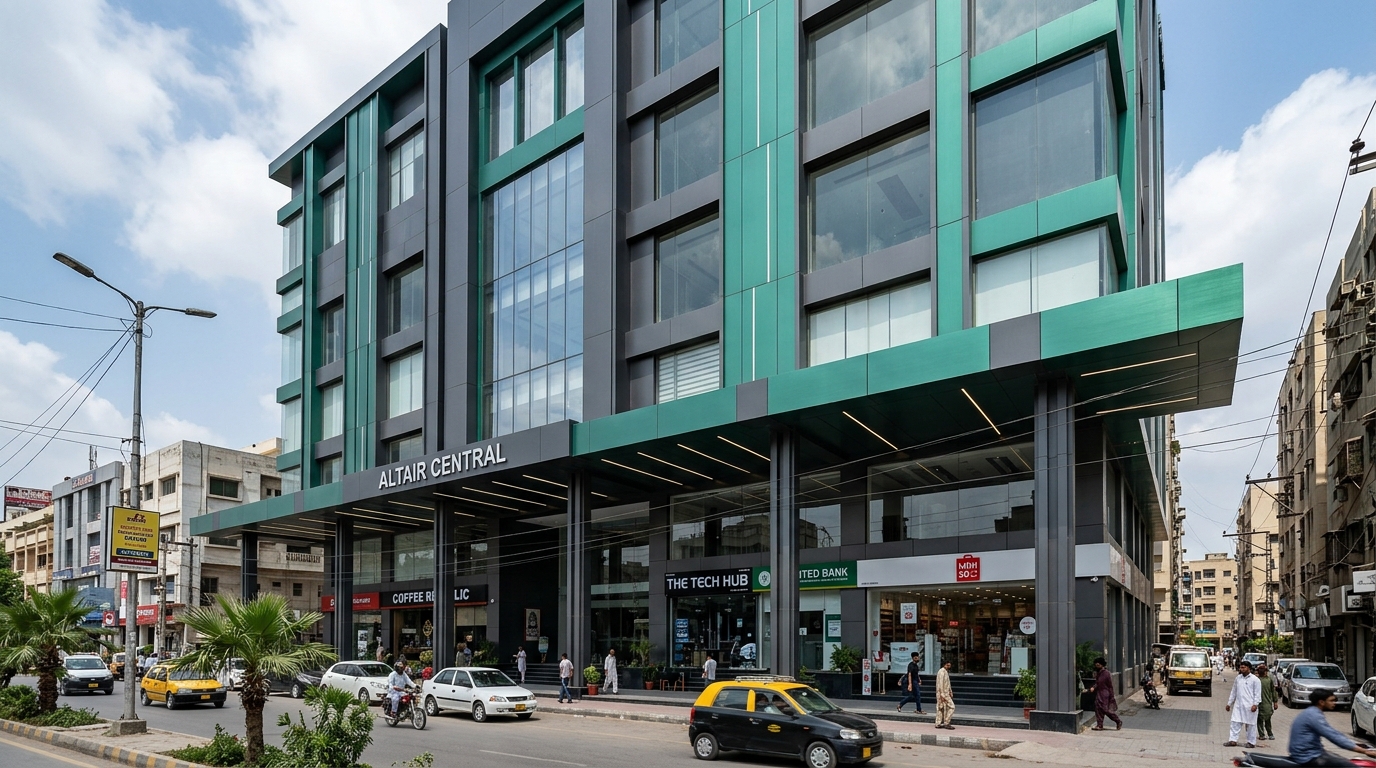
4mm PVDF Fluoropolymer Panels with Precision CNC Tray Cassettes
Proposed Architectural Division
Our ACP Cladding services are active proposed capabilities offered on a consultation and project-by-project basis with complete structural CAD engineering, sub-frame welding, and turnkey site installation.
Engineered for Architectural Rigidity & Thermal Expansion
Facade panels must withstand coastal gale-force wind suction and high thermal expansion without distortion or detachment.
PVDF 70% Kynar 500 Fluoropolymer Coating
Multi-layer fluorocarbon baking process delivering superior resistance to intense ultraviolet degradation, urban chemical smog, and marine salt corrosion.
Cassette Tray Fabrication & CNC Routing
Panels are V-grooved with precision CNC routers and folded into 4-sided structural cassette trays reinforced with corner cleats, eliminating surface waviness.
Class B1/A2 Fire-Retardant Mineral Core
Non-combustible inorganic mineral core prevents flame propagation, toxic smoke emissions, and molten droplet generation during fire hazards.
Engineered Coastal Wind-Load Sub-Frame
Heavy-gauge epoxy-coated steel tubing grid designed to withstand Karachi coastal gale gusts up to 120 km/h without deflection or rivet shear.
PVDF Coating vs. PE Coating: Architectural Comparison
Why standard polyester finishes fail rapidly in Karachi's maritime air and why we mandate Kynar 500 PVDF resins.
| Engineering Attribute | Our PVDF 70% Fluoropolymer | Standard Polyester (PE) Coating |
|---|---|---|
| Coating Resin Base | 70% Kynar 500 / Hylar 5000 Fluoropolymer | Standard Polyester (PE) Resin |
| UV Resistance (QUV Testing) | Zero chalking or fading after 4,000+ hours | Noticeable chalking & color loss at 800 hours |
| Maritime Salt Fog Resistance | Passed 3,000 Hours ASTM B117 Salt Spray | Blistering and micro-pitting after 500 hours |
| Thermal Working Range | -50°C to +90°C Continuous | -10°C to +60°C (Softens under high heat) |
| Expected Exterior Longevity | 10 to 15+ Years Commercial Life | 2 to 3 Years before visible degradation |
| Recommended Usage | Exterior Facades, Corporate Plazas & Monoliths | Interior Partitions, Temporary Exhibition Stalls |
Architectural ACP Specifications & Structural Benchmarks
Rigorous mechanical and physical benchmarks applied to all facade panels and mounting structures.
| Technical Parameter | Specification Benchmark |
|---|---|
| Overall Panel Thickness | 4.0 mm (±0.1 mm Tolerance) |
| Aluminum Skin Thickness | Dual 0.50 mm High-Tensile Alloy (AA3003 / AA5005) |
| Surface Finish & Coating | PVDF 3-Coat 2-Bake (Total Film Thickness 28–32 µm) |
| Core Material | Fire-Resistant Non-Combustible Mineral or Virgin LDPE |
| Tensile Strength (MPa) | ≥ 130 MPa |
| Flexural Elasticity | ≥ 20,000 MPa (High Rigidity, Zero Oil-Canning) |
| Thermal Expansion Coefficient | 2.4 mm / m at 50°C ΔT (Engineered Expansion Jointing) |
| Adhesive Film Type | Dupont Macromolecular Hot-Melt Adhesive Film |
Commercial Deployment Sectors
Engineered ACP cladding installations tailored to commercial building typologies.
Corporate Headquarters Towers
Monolithic, sleek exterior elevations reflecting architectural authority on I.I. Chundrigar Road and Clifton business zones.
Commercial Retail Storefronts
High-contrast brand fascias framing illuminated 3D acrylic letters and dynamic entrance canopies.
Fuel Retail Canopies & 3S Centers
Durable, non-combustible cladding resistant to fuel vapor, oil stains, and continuous weather exposure.
Healthcare Facilities & Hospitals
Hygienic, low-maintenance architectural facades projecting clean, state-of-the-art medical standards.
Frequently Asked Questions — Commercial ACP Cladding
Why is PVDF coating essential over standard PE coating for outdoor ACP in Karachi?
Standard PE (Polyester) coating is intended strictly for interior decoration or signage in mild climates. When exposed to Karachi's intense solar UV index, high humidity, and airborne maritime salts, PE coating chalks, loses its gloss, and fades noticeably within 18 to 24 months. PVDF (Polyvinylidene Fluoride) with minimum 70% Kynar 500 / Hylar 5000 resin forms an indestructible molecular fluoropolymer bond that resists UV radiation, acid rain, and coastal oxidation, backed by a 10-year anti-fading warranty.
What core material is specified: Standard LDPE or Fire-Rated Mineral Core?
We specify both Fire-Retardant Class B1/A2 mineral-filled cores and architectural virgin LDPE cores. For commercial high-rises, fuel retail stations, bank branches, and public plazas, we mandate Class B1 or Class A2 fire-resistant non-combustible mineral cores in strict compliance with municipal civil defense and fire safety codes.
How do you engineer ACP facades to prevent buckling and 'oil-canning' under heat?
Aluminum expands thermally by approximately 2.4mm per meter under a 50°C temperature swing. 'Oil-canning' (unsightly wavy panel surfaces) occurs when unskilled installers rigidly screw panels without expansion allowances. We route and fold panels into rigid 25mm to 30mm tray cassettes with internal aluminum corner stiffeners, mounting them on slotted sub-frame brackets with neoprene isolation washers to permit smooth thermal expansion and contraction.
Which joint system is superior: Wet-Sealed Silicone or Open-Joint Rainscreen?
Wet-sealed joints using non-staining structural neutral silicone sealant provide an airtight, waterproof barrier ideal for storefront fascias and retail modernizations. For multi-story commercial corporate facades, we recommend ventilated open-joint rainscreen systems featuring concealed rear drainage gutters, preventing dirt streaks and allowing air circulation to reduce building heat loads.
What sub-frame metal structure is installed behind the ACP panels?
We fabricate an engineered sub-chassis grid utilizing 1.5-inch or 2-inch structural mild steel square tubing with minimum 1.5mm wall thickness. The entire metal grid is sandblasted and coated with two coats of anti-rust zinc phosphate epoxy primer before anchoring to the concrete substrate with M10/M12 expansion anchor bolts.
Can existing aged building facades be modernized without demolishing masonry walls?
Yes, this is one of ACP cladding's greatest advantages. We perform laser structural surveys and anchor the custom sub-frame directly onto existing brick, concrete, or plastered surfaces, instantly transforming dated commercial buildings into sleek, contemporary corporate landmarks without structural downtime or interior disruption.
What sheet thicknesses and aluminum skin gauges do you utilize?
Our exterior architectural cladding standard is 4.0mm overall panel thickness featuring dual 0.50mm high-tensile aluminum alloy skins (AA3003 or AA5005). We strictly avoid substandard 3mm panels or paper-thin 0.21mm skins that dent easily from wind-blown debris or ladder impacts.
What finishes and color textures are available?
Finishes include Solid Corporate Colors (Standard White, Green, Navy, Charcoal), Metallic Shimmers (Silver Metallic, Champagne Gold, Bronze), Brushed Natural Metals, and High-Gloss Mirror effects. Custom corporate identity Pantone shades can be custom coil-coated for volume projects.